Permafrost and Ground Ice
Permafrost & Ground Ice
Introduction
This chapter examines the aqueous cryosphere which encompasses the freezing of oceans, lakes, and rivers. Unlike glaciers, which originate from compacted snow, these forms of ice grow directly from liquid water. The resulting material properties and visual signatures are defined by a single variable: Salinity.
Freshwater freezes at 0°C where its forming stable and monolithic sheets that can be as transparent as glass. Seawater, however, is a chemical solution, freezes at -1.8°C and mechanically rejects salt as it solidifies. This creates a porous, multi-phase material composed of pure ice crystals interspersed with liquid brine channels, causing it to behave less like a solid block and more like a malleable ceramic. Also water itself plays a critical role in shaping the frozen ground. In the Arctic, many lakes are formed when melting permafrost causes the land to collapse. This creates a chaotic landscape known as Thermokarst.
The Physics of Frozen Ground
To understand the macroscopic majesty of Arctic landscapes, one must first descend to the microscopic scale of soil physics.
The Active Layer
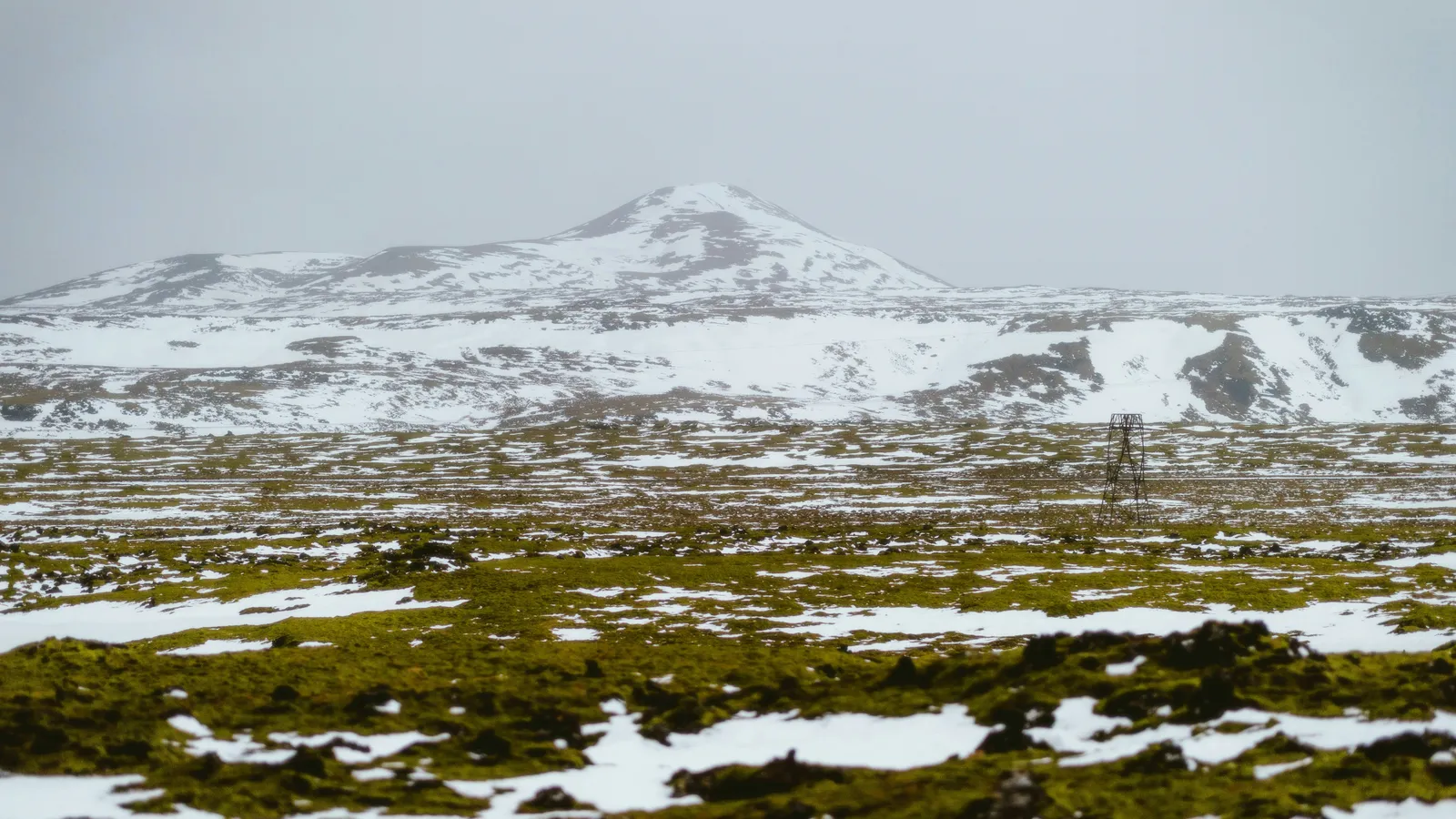
Permafrost terrain is vertically stratified. The perennially frozen ground sits beneath a surface zone known as the Active Layer. This top layer thaws every summer and refreezes every winter. As it thaws in spring the ice turns to water which, unable to drain through the impermeable permafrost below, pools to create the characteristic waterlogged bogs of the summer tundra.
Ice Segregation and Heave
The landscape is shaped by Ice Segregation, which is a process where the soil acts like a wick. As the ground freezes, liquid water is drawn upward through microscopic pores to the frost line. Here it collects, and then solidifies into a horizontal sheet known as an Ice Lens.
As water continues to feed this layer from below, the ice grows thicker and exerting immense pressure that acts like a hydraulic jack. This force is known as Frost Heave and creates a stratified layer of ice and dirt that physically lifts the surface, fracturing bedrock and buckling the terrain into uneven mounds.
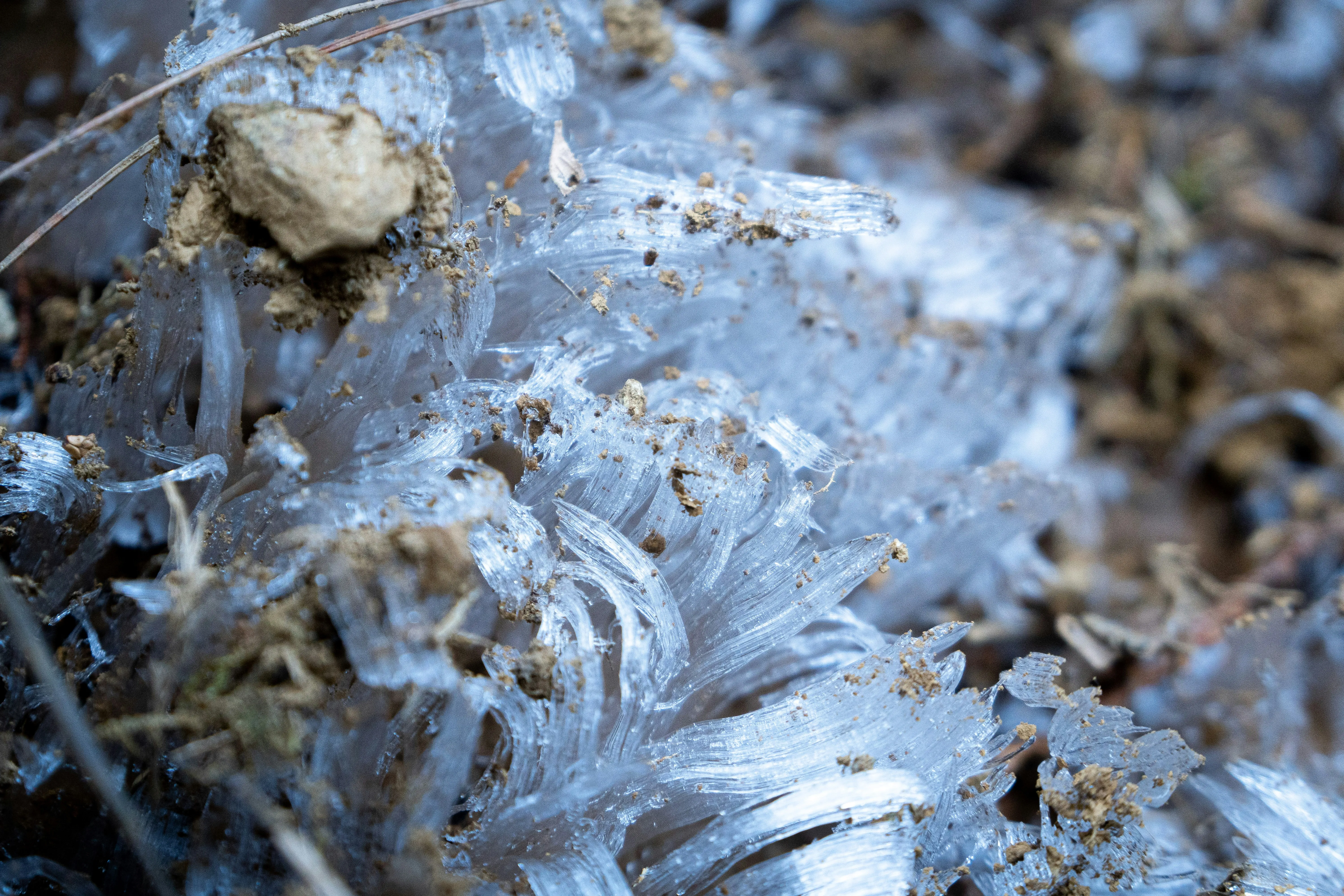
At the surface this segregation manifests as Needle Ice (Pipkrake). When the air freezes but the soil remains damp the ice is extruded upward from the pores as glass-like filaments, which are lifting a “cap” of loose soil or pebbles on their tips.
Ground Ice
Ground ice is the structural backbone of permafrost. Its form determines how the landscape will react to warming.
The most fundamental form is Pore Ice, which cements soil grains together into a material that is as rigid as concrete. In clay-rich soils this evolves into Reticulate Cryostructures which is a lattice of ice veins that gives the soil a marbled texture.
When the ice volume exceeds the soil volume it creates Massive Ice, most notably in the form of the Ice Wedge. In the winter, frozen ground contracts until it snaps open. In spring, meltwater fills the crack and freezes, which will then create a vertical vein that, repeated over centuries, builds massive V-shaped wedges. They penetrate deep underground and one can spot them on the surface as a geometric honeycomb of Ice Wedge Polygons.
While wedges grow within the earth, Aufeis (or Naleds) accumulates on top of it.
Patterned Ground
The surface of the permafrost zone is organized into geometric patterns that are the result of several feedback loops.
| Structure | Mechanism | Look |
|---|---|---|
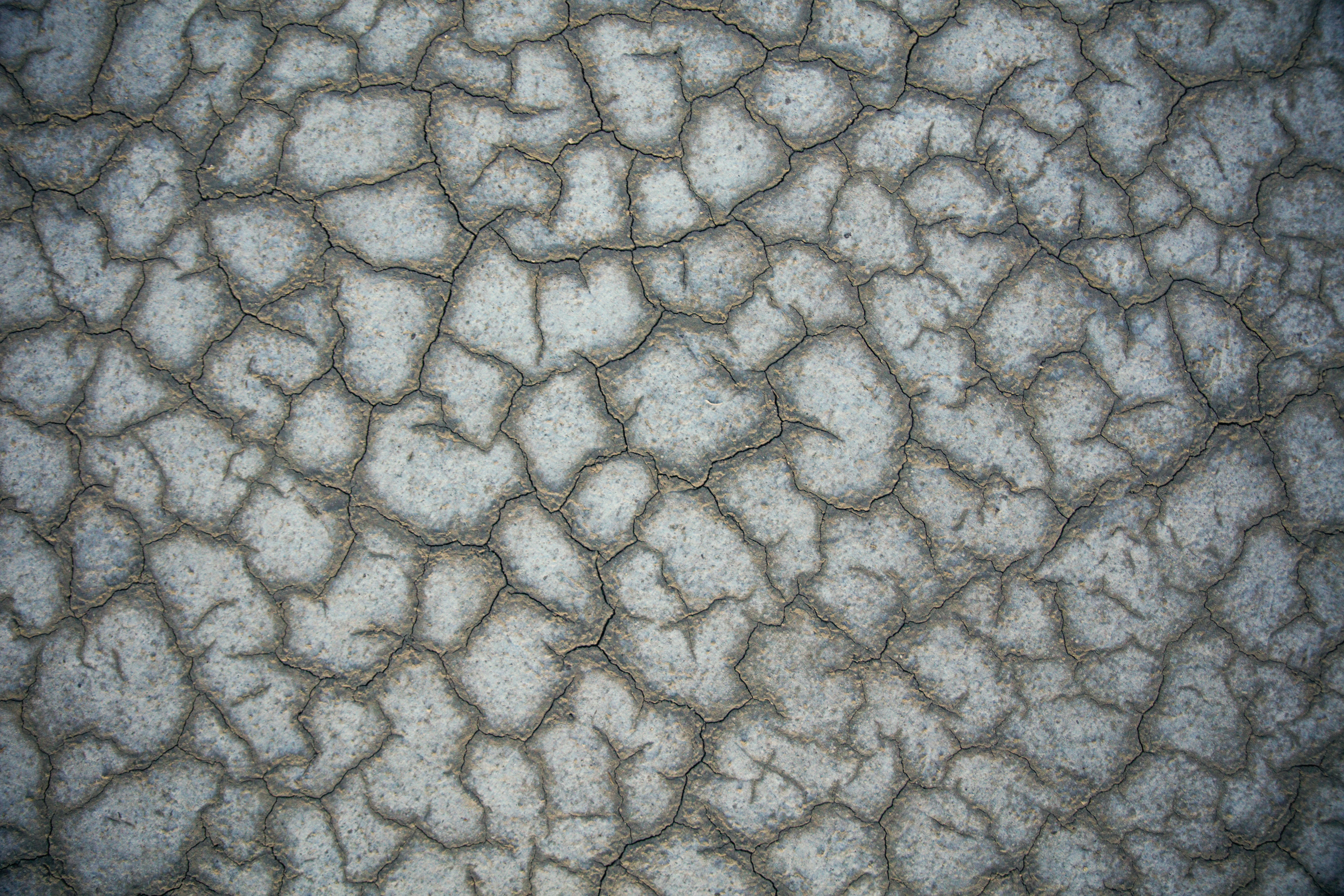
| Frost Boils | Churning. The center freezes deeper and swells up. In summer the wet soil flows outwards and creates a convection loop that prevents moss from growing. | Circular patches of grey mud surrounded by tall grass. |
| Sorted Circles | Sorting. Stones conduct cold faster than soil, causing ice to push them to the surface. Once they are exposed they slide off the domed mud center to the perimeter. | Rings of boulders surrounding a core of silt. |
| Stone Stripes | Gravity. On steep slopes gravity pulls the stones downhill, so it is stretching circles into lines. | Parallel furrows of rock running down a mountain. |
Permafrost Mounds
Hills in the flat Tundra are often built of ice instead rock. Pingos are conical mounds that can rise 50m high, as they get pushed up by a massive core of ice. They resemble solitary volcanoes, and collapse into crater lakes when they melt.
Thermokarst
When the ice holding the ground together melts, the land collapses, which is called Thermokarst.
The basic building block of this terrain is the Alas, a steep but flat depression formed when a block of ground that is rich in ice sinks. These depressions usually fill with water to form lakes, which then hold heat and melt the ground even further. If the lake drains, the floor refreezes, and is often pushing up a new pingo in the center. On a larger scale the melting creates Beaded Streams.
In the taiga the instability of grounds creates Drunken Forests. Trees like the Black Spruce rely on shallow roots that are sitting on top of the frozen soil. When the foundation melts unevenly the trees lose their balance and tilt in random directions. This is different from wind damage, where trees are all tilted in the same direction.
Catastrophic Phenomena
While permafrost usually decays slowly it can also be explosive, as seen at the Batagaika Crater in Siberia. Locals call it the “Gateway to the Underworld” since it is a steep hole and due to the noises it makes.
Even more explosive are the Gas Emission Craters of the Yamal Peninsula, where methane gas builds up pressure beneath a cap of frozen ground until the earth explodes.